A People of the Plains
Few indigenous cultures on earth are as instantly recognisable as the Maasai. Tall, graceful, wrapped in vivid red cloth and adorned with elaborate beadwork, they are a fixture of the East African landscape — moving through the same grasslands as lions and elephants, living according to a code of values that has endured for centuries despite enormous pressure to abandon it.
The name Maasai means, simply, «people who speak Maa» — and Maa, a Nilotic language related to Dinka and Kalenjin, remains the mother tongue of a population now estimated at over one million in Kenya and more than 400,000 in Tanzania. They are one of the most studied and documented peoples in Africa, yet they remain profoundly, defiantly themselves.
Their homeland stretches from the shores of Lake Turkana in northern Kenya down through the Great Rift Valley to the Ngorongoro highlands of northern Tanzania — an arc of savanna, escarpment, and open plain that encompasses some of the most extraordinary wilderness on the planet. The Masai Mara, the Serengeti, Amboseli, Tsavo, Ngorongoro: these are not just wildlife destinations. They are Maasai ancestral lands.
Origins: A Journey from the Nile
The Maasai’s own oral tradition tells of an origin in the lower Nile Valley, north of Lake Turkana, from where their ancestors began a great southward migration around the 15th century. By the 17th and 18th centuries, they had reached the central plains of East Africa, displacing or assimilating many of the peoples they encountered along the way.
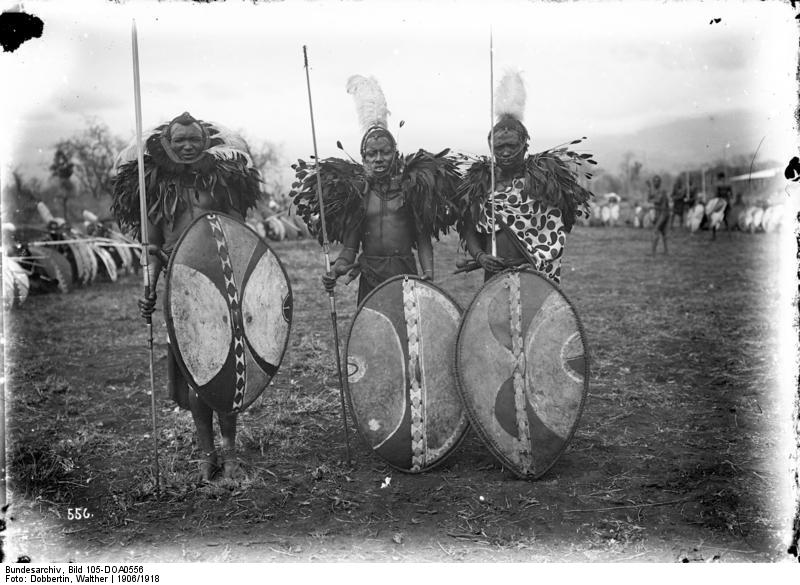
By the mid-19th century, Maasai territory was enormous — encompassing nearly the entire Great Rift Valley and the lands surrounding it, from what is now northern Kenya to central Tanzania. They were feared as warriors; their throwing clubs, known as orinka, were said to be accurate at up to 70 paces. Their cattle herds numbered in the hundreds of thousands.
Then came the catastrophe known as Emutai — a period between 1883 and 1902 that brought epidemic disease, rinderpest that decimated their cattle, smallpox, and drought. Estimates suggest that up to two-thirds of the Maasai population perished. The community that had dominated the plains was dramatically reduced, and in their weakened state they faced a new and permanent threat: colonial land dispossession.
Land, Loss, and Resilience
British colonial rule brought two treaties — in 1904 and 1911 — that stripped the Maasai of approximately 60 per cent of their lands in Kenya, relocating them to less fertile territories in what are now the Narok and Kajiado districts. In Tanzania, similar processes pushed Maasai families out of fertile highlands near Kilimanjaro and Ngorongoro. National parks and wildlife reserves were later carved out of what remained — Amboseli, the Masai Mara, the Serengeti, Ngorongoro, Tsavo — lands that had been Maasai grazing grounds for generations.
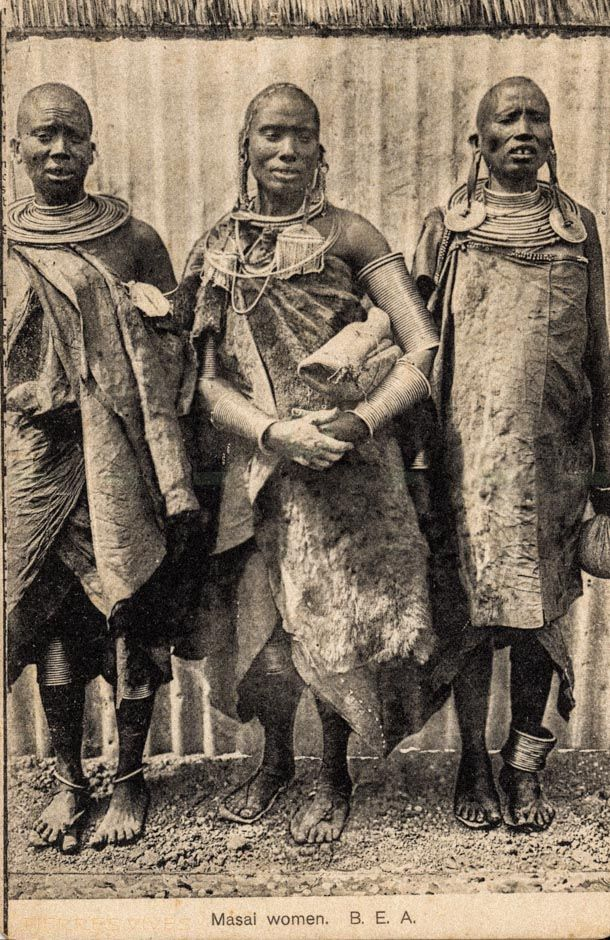
The paradox is a painful one: the most iconic wildlife destinations in the world occupy the ancestral homeland of a people who were excluded from them. And yet the Maasai have endured. More than any other Kenyan or Tanzanian ethnic group, they have resisted the pressure to adopt sedentary lifestyles, abandon their language, or relinquish their identity — not through isolation, but through a profound and deliberate commitment to who they are.
«We are already wealthy,» a Maasai guide once told a researcher who asked why they resisted formal schooling. «We are wealthy because of the richness of our culture and our way of life.»
What Defines Maasai Culture
The threads that make up Maasai cultural identity are many and intricate, but a handful stand out as fundamental to understanding this extraordinary people.
Cattle are not merely livestock but the central axis of Maasai life — spiritual, economic, and social. According to Maasai belief, the deity Enkai entrusted all the world’s cattle to the Maasai at the moment of creation, lowering them to earth on a leather cord. To own cattle is to fulfil a sacred duty; the size of a man’s herd determines his wealth and status. The traditional diet — built around milk, blood, and meat — flows entirely from this relationship with livestock.
Read more about this at National Geographic’s The Cattle Economy of the Maasai
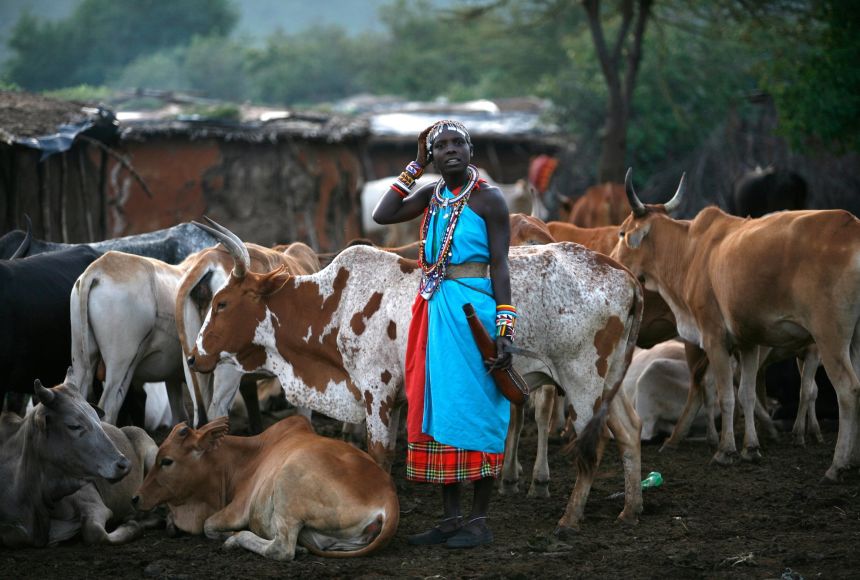
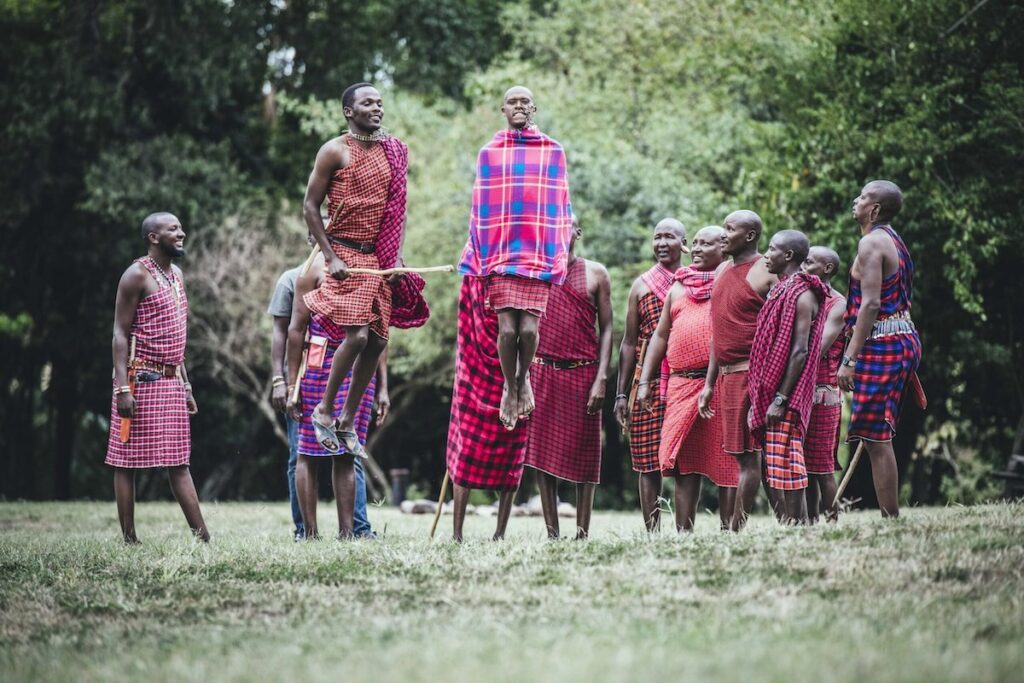
The age-set system organises Maasai society in a way that has no real equivalent in the Western world. From childhood through initiation, warriorhood, elderhood, and retirement, every Maasai man passes through a defined series of life stages, each with its own responsibilities, privileges, and rituals. The moran — young warriors in their teens and twenties — are the most visible expression of this system, recognisable by their distinctive dress, red ochre body paint, and long braided hair.
Ceremony and ritual mark every major transition in Maasai life. Initiation, marriage, the progression between age sets — all are marked by elaborate ceremonies involving days of singing, dancing, feasting, and communal gathering. The eunoto, the warriors’ coming-of-age ceremony, can last more than ten days.

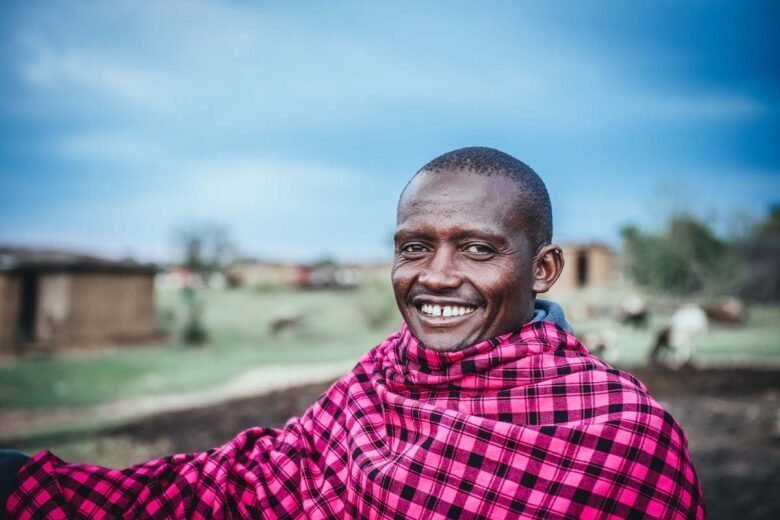
Beadwork and dress carry dense cultural meaning. The vivid shúkà cloth — most often red, though blue, orange, and purple are also common — is worn by both men and women. Red holds the greatest significance, symbolising bravery, unity, and the blood of cattle. Beaded jewellery is worn by all, with different colours encoding information about the wearer’s age, status, and marital situation.
Spirituality is monotheistic: the Maasai worship a single deity, Enkai, who is neither male nor female, and who is associated with rain, fertility, and the sky. The laibon — a spiritual leader and diviner — serves as an intermediary between the community and Enkai, offering blessings and guidance, particularly in times of illness or conflict.
A Living Culture at Enkewa’s Door
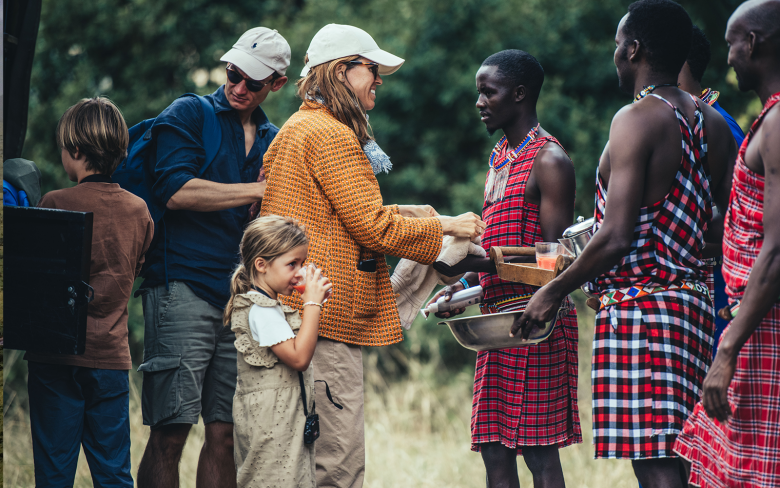
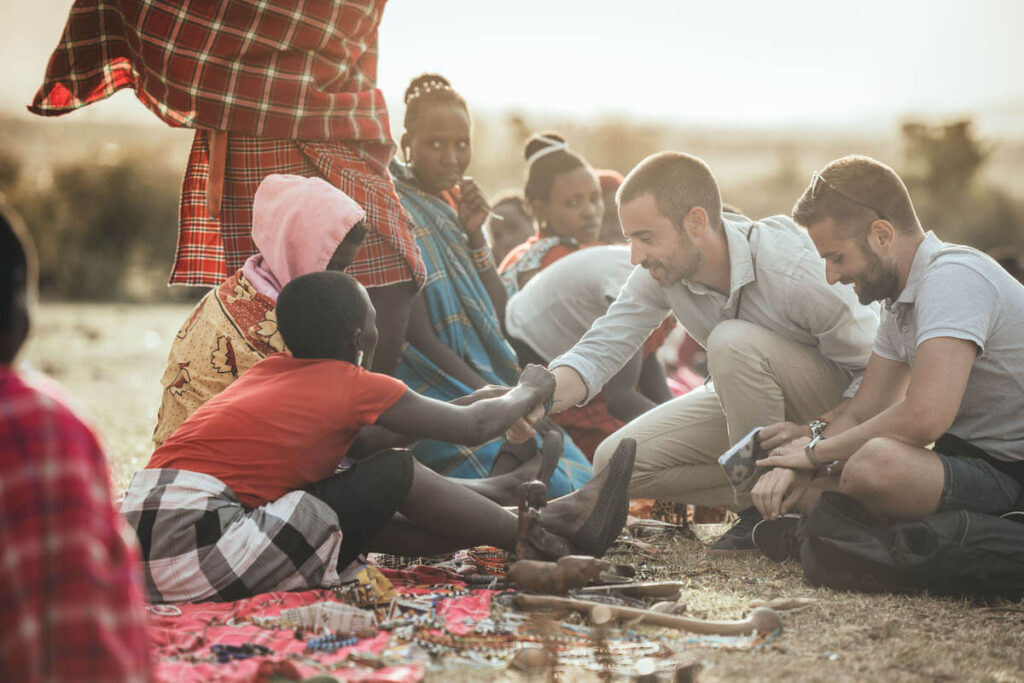
At Enkewa Camp, the Maasai are not a backdrop or an attraction. They are colleagues, guides, neighbours, and friends — members of the Olderkesi community whose families have grazed cattle across this very landscape for generations. The guides and trackers who lead safaris from the camp carry within them a knowledge of this land, its animals, its seasons, and its signs that no formal training could replicate. Their culture and their wilderness are, in the deepest sense, one and the same.
This is why we believe that understanding the Maasai is inseparable from understanding what makes this corner of the Mara so extraordinary. In the articles that follow, we will explore the many facets of Maasai life in greater depth — their ceremonies and rites of passage, their relationship with cattle, their approach to the natural world, their spiritual life, their oral traditions, and the challenges and opportunities they face today.